
Ephesus Warrant Checks
Start with the paper. A citation, missed-appearance notice, or ordinance document is your best clue, because it usually names the issuing jurisdiction. Ephesus posts no public warrant lookup and no separate municipal-court page, so the document does the pointing. Before you call, gather the exact legal name, date of birth, citation or case number, and the approximate event date. Share personal identifiers only through an official channel, never a third-party site.
- Confirm that the document names Ephesus rather than Heard County generally.
- Call Ephesus City Hall at (770) 854-8616 and ask which clerk or court handles the matter.
- Ask that clerk whether the record is active, recalled, or set for another appearance.
- For service information, call HCSO at (706) 675-3329 or non-emergency dispatch at (706) 675-3328.
- After confirmation, ask the issuing court or a Georgia attorney about lawful resolution; Georgia has no statewide public warrant search.
Start at Ephesus City Hall
Ephesus City Hall publishes its contact point at 24500 Georgia Highway 100, Roopville, GA 30170, with phone (770) 854-8616 and email info@ephesus.gov. That gives you a verified place to ask who handles an Ephesus ordinance, traffic, or missed-court matter. Keep in mind that City Hall will not hold every warrant file. Ask plainly: which clerk or court currently handles this Ephesus citation, and what is its direct number? Request the accepted case identifier too, and ask whether staff confirm status by phone. One question at the city level can save a wasted call to a county court that never owned the record. The official city contact page lists Ephesus civic contacts rather than any person-level record search.
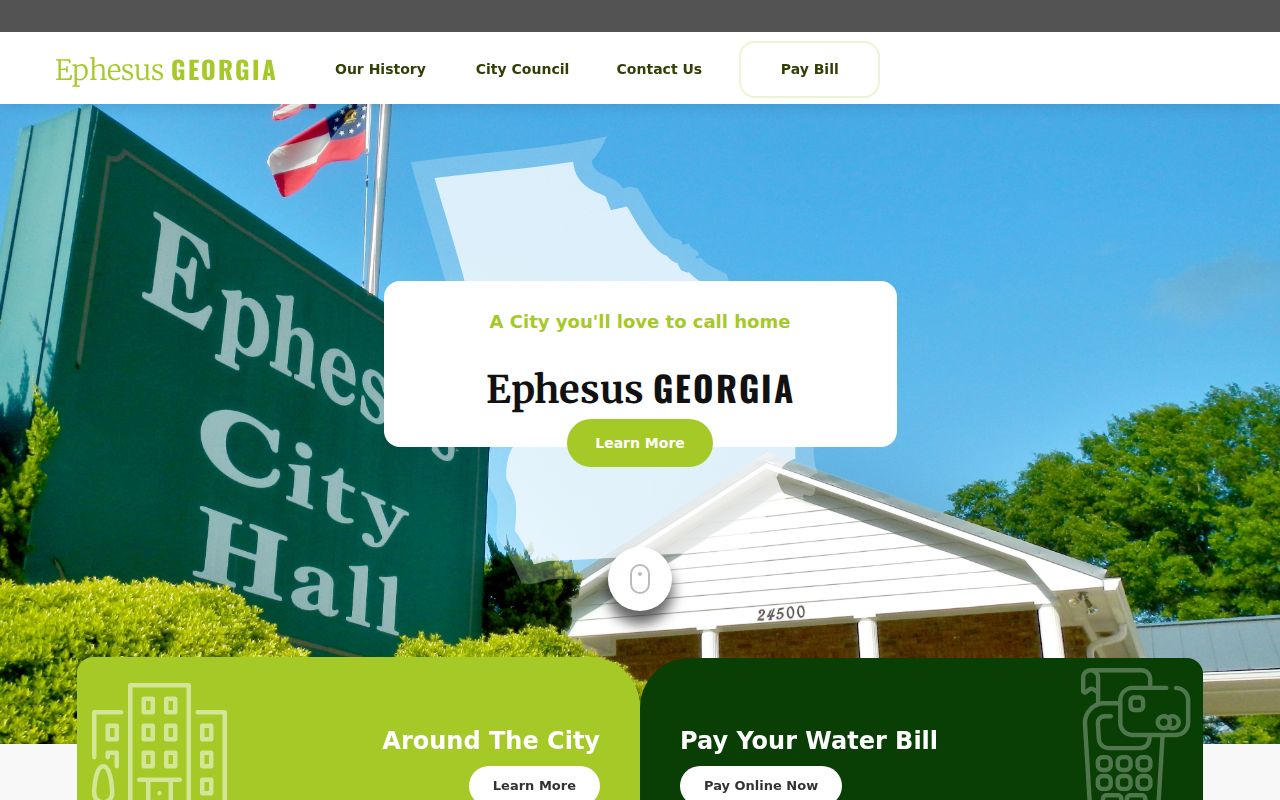
Its lack of a warrant control is why direct clerk routing begins the check.
Policing and Courts in Ephesus
Ephesus publishes no separate police-department or municipal-court warrant page of its own. The official service-delivery strategy explains the arrangement: Ephesus contracts with off-duty Heard County Sheriff's deputies for policing, while Franklin runs its own police department. Shared personnel shift the contact chain, but they do not merge city and county records into one file cabinet. A judicial officer issues a warrant. Law enforcement serves it. For an Ephesus ordinance or traffic matter, City Hall should identify the municipal clerk or court route, and HCSO may confirm service when directed. The clerk controls court status, settings, recall, and the underlying case. The serving agency controls only its return and execution information, so ask each office about the piece it owns.
No Ephesus Warrant Portal
The official Ephesus city site offers no warrant, citation, court, or name-search form. That gap proves nothing about whether open Ephesus warrants exist. It means only that no verified city webpage can give you a complete status answer. A commercial result or a county payment screen cannot fill that hole either.
Portal caution: No online result is not the same as no warrant. Confirm jurisdiction with City Hall and the responsible clerk.
Georgia Courts reports no centralized statewide traffic-citation database either. A citation record may sit with a municipal clerk, rest in an underlying court file, await transmission, or be restricted from view. A precise inquiry using your own identifiers beats any unrelated web database.
Warrants in Ephesus: The Main Types
The type depends on the issuing document and court. Ephesus publishes no glossary or bond matrix, so never infer a label from an arrest, an unpaid balance, or a missed date.
| Warrant Type | How It Arises | Issuing Route |
|---|---|---|
| Traffic bench warrant | An unexcused failure to appear on a citation. | The citation court; verify the Ephesus route through City Hall. |
| Ordinance warrant | An unresolved city ordinance case. | A municipal judicial officer with jurisdiction. |
| Bench warrant | A missed hearing, contempt, or disobeyed court direction. | The court where the case is pending. |
| Arrest warrant | Sworn information establishes probable cause. | A qualified judicial officer; Magistrate Court is a county-side contact. |
A search warrant lets officers look for evidence. It will not answer whether Ephesus has an active arrest or bench warrant out for you.
Ephesus Citation Jurisdiction Matters
A citation tied to Ephesus is not automatically a city-court file. Whatever issuer and court are printed on it control. City ordinance questions begin with City Hall. Heard Probate Court administers county traffic citations, Magistrate Court handles warrant applications, and Superior Court keeps felony case records. One office can truthfully say "no record" while another holds the case. So read the court name, citation number, hearing location, and agency line before calling. If it names a county court, call that court first. Do not treat EZ Court Pay as a warrant database; its date-of-birth, citation-number, and last-name fields locate citation information only. Note: Ask whether a citation is municipal or county-issued before discussing payment, recall, or a new court date.
Ephesus Warrant Records: What They Show
An Ephesus court file may link a warrant to an application, citation, affidavit, or case. No official sample or local number format is published. These fields reflect Georgia's verified record structure, not an invented Ephesus code.
| Warrant or case number | The court identifier linking the order to a case, citation, or application. |
|---|---|
| Subject name | The legal name, checked with date of birth when accepted to distinguish similar names. |
| Charge or offense | The allegation, ordinance issue, or failure-to-appear event. |
| Issuing court | The office controlling hearings, recall, or quashing. |
| Bond or fine notation | Any court-recorded amount or condition; no Ephesus schedule is published. |
| Status and return | Active, served, recalled, or disposed status and available service information. |
Ask which field proves present status, and get the answer in writing when you resolve the matter in Ephesus.
No Ephesus Bond Schedule
No official Ephesus source publishes a bond schedule, surrender procedure, recall form, payment plan, or any promise that a balance can be paid online. Never apply an amount from another Heard court. Bond is security for release while a case continues; paying it does not end the charge. Ask whether bond or release on recognizance is available, whether a new appearance is required, where surrender takes place, and what document proves recall. Recall means the court withdraws the warrant. Quash means it sets the order aside judicially. A receipt alone proves neither. If an appearance could lead to custody on an active warrant, talk with a Georgia defense attorney first. State guidance warns that in-person sheriff contact can mean immediate custody.
Ephesus Warrants and Heard County
Warrant work in Ephesus splits across offices. Off-duty Heard County sheriff's deputies police the city and serve papers, while a municipal officer may handle a city case. County matters follow other paths: Magistrate Court takes warrant applications, Probate Court handles county traffic citations, and the Superior Court clerk keeps felony files. No statewide Georgia database merges all of them.
Warrant flow: Ephesus municipal clerk or court › Heard County Sheriff's deputies › issuing court status and service return
One phone call rarely settles both questions. Service and court status live with different offices in Ephesus. The Heard County warrant records overview maps the offices, but the issuing clerk answers a court date, a recall, or a disposition.
HCSO Confirms Ephesus Service
Ephesus relies on off-duty sheriff's deputies for policing, so HCSO is a natural contact once City Hall points you to the right court. The Sheriff's contact page lists (706) 675-3329 and non-emergency dispatch at (706) 675-3328. The office sits at 11820 Highway 100 N in Franklin. HCSO publishes no dedicated warrant line, no anonymous-check policy, and no Ephesus roster. Before you drive over, ask what identification the office requires. Only the court can tell you the next setting, a recall, or the case behind a warrant. Serving papers does not make HCSO the clerk for every Ephesus municipal file. Note: Calling an agency does not clear a warrant; only the issuing court's directions do that.
Accessing Ephesus Warrant Records
Georgia's Open Records Act leans toward releasing identifiable agency records, though exemptions apply. Send any Ephesus request to the office that actually holds the record. City Hall can name the municipal custodian. HCSO accepts requests for sheriff records, and personal identifiers should go only through the official channel.
Key Rules:
Georgia Open Records Act, O.C.G.A. §§ 50-18-70 through 50-18-76 generally opens records unless an exemption applies.
O.C.G.A. § 50-18-71 governs inspection, copying, response, and reasonable charges.
O.C.G.A. § 50-18-72 permits withholding or redaction; sealed, juvenile, and active-investigation material may also be restricted.
The Act creates no online Ephesus warrant list. If a record is withheld, ask for the statutory basis and whether a less restricted status record exists.
Ephesus Records Request Routes
When an HCSO record is the right target, use the sheriff's Open Records form. Submit it by email to jolinger@heardcountyga.com, by mail to P.O. Box 339, Franklin, GA 30217, or in person at the Highway 100 office. The form lets you choose review, pickup, or mailed copies. HCSO responds within three business days, or it gives an estimate when records are not immediately available. State guidance makes the first fifteen minutes of search and retrieval free; added search, copying, or supervision can cost extra. Ephesus publishes no certified-copy fee, so ask before ordering. Keep the request narrow: enough to show whether HCSO maintains a warrant record for the requester, with a date range and any known case identifier. A negative answer can still mean a municipal custodian, another court, or a restricted file holds the record. Ask which system and date range were checked. Then return to the issuing clerk in Ephesus rather than reading silence as statewide clearance.
Ephesus Warrant Calendar Watch
Ephesus publishes no municipal court calendar, warrant calendar, court-date library, or surrender schedule on its official city site. Franklin is different; its document library lists municipal court dates. A Heard County resident should not borrow Franklin's calendar or assume both cities run the same court session. Start with the Ephesus City Hall phone and email, and ask who keeps the city docket now. A good calendar question is narrow. Give the date and court printed on your own citation or notice, then ask whether that setting still stands. If a date was missed, ask whether the judge entered a failure-to-appear warrant, issued notice, reset the case, or took some other action. Georgia's citation rules allow a warrant after an unexcused failure to appear, but the local court record shows what happened in a specific Ephesus case. No official Ephesus court reform, amnesty, roundup, or warrant notice appears in county channels now, so verify any change through the city site, HCSO, county news, or the clerk City Hall names. A social post with no official source behind it should not drive a decision about surrender, payment, bond, or a court date. If Ephesus ever posts a calendar, treat it as a scheduling aid only. A date list does not prove a warrant was issued, served, or recalled. Confirm status with the clerk. Ask for a written disposition whenever the court changes an order.
Ephesus Warrant Custodian Questions
Who actually holds the paper? In Ephesus, that question comes first because the city runs no online warrant portal of its own. City Hall may keep ordinance matters with a municipal clerk. The Heard County Sheriff's Office, known as HCSO, may hold service details, since off-duty sheriff's deputies handle local policing under contract. A county court can hold a separate traffic or criminal file on the same matter. So ask each office what record it keeps, not the same broad question of all of them. When you reach the city custodian, request specifics. The case number, the ordinance or offense label, any scheduled appearance, a failure-to-appear entry, the warrant issue date, bond or release conditions, and any recall or disposition all matter. With HCSO, ask whether the agency can confirm service or a warrant return. A return is simply the officer's report back to the issuing court on whether the warrant was executed. It is not the court's ruling on the case itself. Always use the exact legal name and birth date, and only through the official channel. A known citation or case number helps too. Ephesus may limit access if a matter is sealed, juvenile, under active investigation, or holds protected data. If so, ask whether a less restricted status record can be released instead. The Georgia Open Records Act backs requests for identifiable public records. It does not force Ephesus to build an online list. This split also explains a common puzzle. A blank citation vendor result, a negative sheriff answer, and silence from a county clerk can all coexist without proving clearance. The final answer must come from the office that issued the Ephesus process, with the current date and case identifier tied to it.