
Inside the Heard County Most Wanted Program
The Heard County Sheriff's Office publishes no most-wanted page. Its home, divisions, contact, and news pages carry none. The Heard County site is just as bare. There is no curated roster, no downloadable active-warrant list, no Crime Stoppers partnership page, and no warrant tip form anywhere. So there is no official roster to summarize here. A real roster changes fast, too. Someone drops off after an arrest, a surrender, or a recall. Copied entries go stale quickly for that reason. If the Heard County Sheriff's Office ever launches a program, the smart move is simple: read its own current page rather than any copy. Nothing on an unofficial site stands in for the sheriff's own word.
No Heard County Most Wanted Roster
No public Heard County roster does not mean no warrant records. HCSO may hold service details on a warrant. The court clerk may hold the case record behind it. A city clerk can hold a municipal bench warrant that never shows up on a sheriff webpage. And Georgia offers no single statewide public warrant-search database to close the gap.
Quick answer: Heard County publishes no official most-wanted roster, no public active-warrant search, no tip program, no reward policy, and no posting schedule.
Skip unofficial lists as stand-ins. Their dates and record status stay unknown. If you are checking your own status in Heard County, call HCSO and the issuing clerk directly.
How Heard County Most Wanted Lists Work
A curated most-wanted list and a full active-warrant list are two different products. One is a hand-picked plea for public help. The other returns warrant records matched to your identifiers. Heard County publishes neither. So no selection rule, addition rule, removal rule, or update cadence can be claimed here. If a list appears someday, read its date and its program terms closely. People leave such lists after an arrest, a surrender, a recall, or another lawful change. Publication often lags the real record. Note: a public list is a dated agency notice, not a court order and not proof of current warrant status. An empty result proves nothing either.
HCSO Replaces a Public List
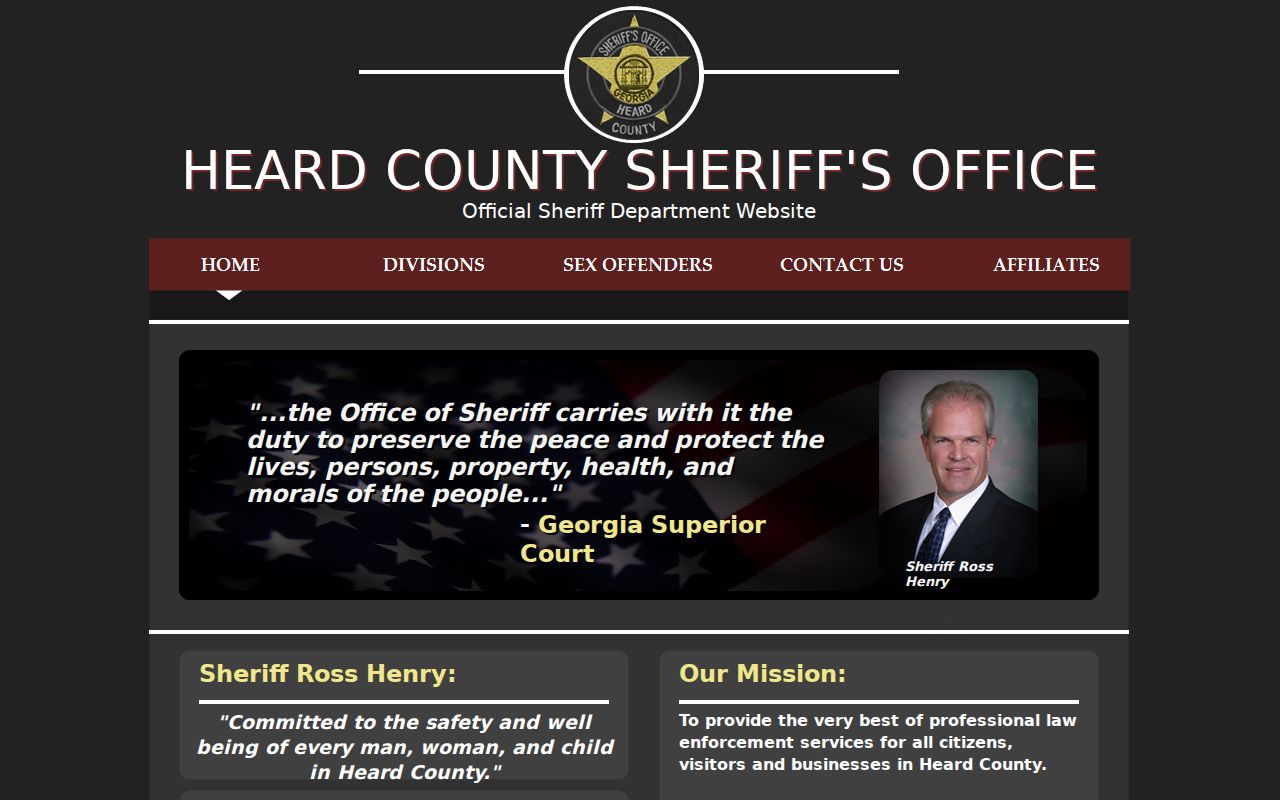
The place to start is the Heard County Sheriff's Office, the county's own law-enforcement hub. For a warrant question, call (706) 675-3329 to reach the sheriff's route or (706) 675-3328 for non-emergency dispatch. Ask which office handles your inquiry and what identifiers it needs. HCSO posts no warrant-unit hours, no anonymous-check policy, and no online appointment system, so confirm those details by phone instead of assuming them. The official HCSO page itself confirms the department's identity and its contact route. It shows no person-level record.
Georgia's official warrant guidance is direct on this point. Call the sheriff of the county that issued the warrant. An office may insist on an in-person visit. A person who walks in on an active warrant can be taken into custody. So call first, and weigh legal advice before checking your own status in Heard County.
Sending a Most Wanted Tip Safely
Heard County posts no dedicated most-wanted tip line, anonymous web form, app, or reward offer. Do not expect anonymity or money. If someone's present location is an immediate threat, call emergency services. Non-emergency information belongs with HCSO's official dispatch route. Follow the operator's lead. Never confront the person yourself.
- Use 911 only for an immediate emergency; otherwise call HCSO non-emergency dispatch at (706) 675-3328.
- State the place, time, and facts you directly observed without guessing at warrant status.
- Do not approach, follow, detain, or announce the report to the person involved.
- Ask the dispatcher whether any further safe action is needed, then step back.
The Heard County sheriff's office lists no official tip number or reward follow-up process. Keep sensitive details off unofficial social accounts.
No Heard County Tip Reward Terms
Heard County has no Crime Stoppers warrant program. There is no cash reward figure, eligibility policy, payment method, or partner-agency list. No posting schedule does either. Borrowing a nearby county's terms would mislead. Reward programs set their own rules, and one county's anonymous process never binds Heard County. The HCSO contact page gives the local sheriff and non-emergency routes instead.
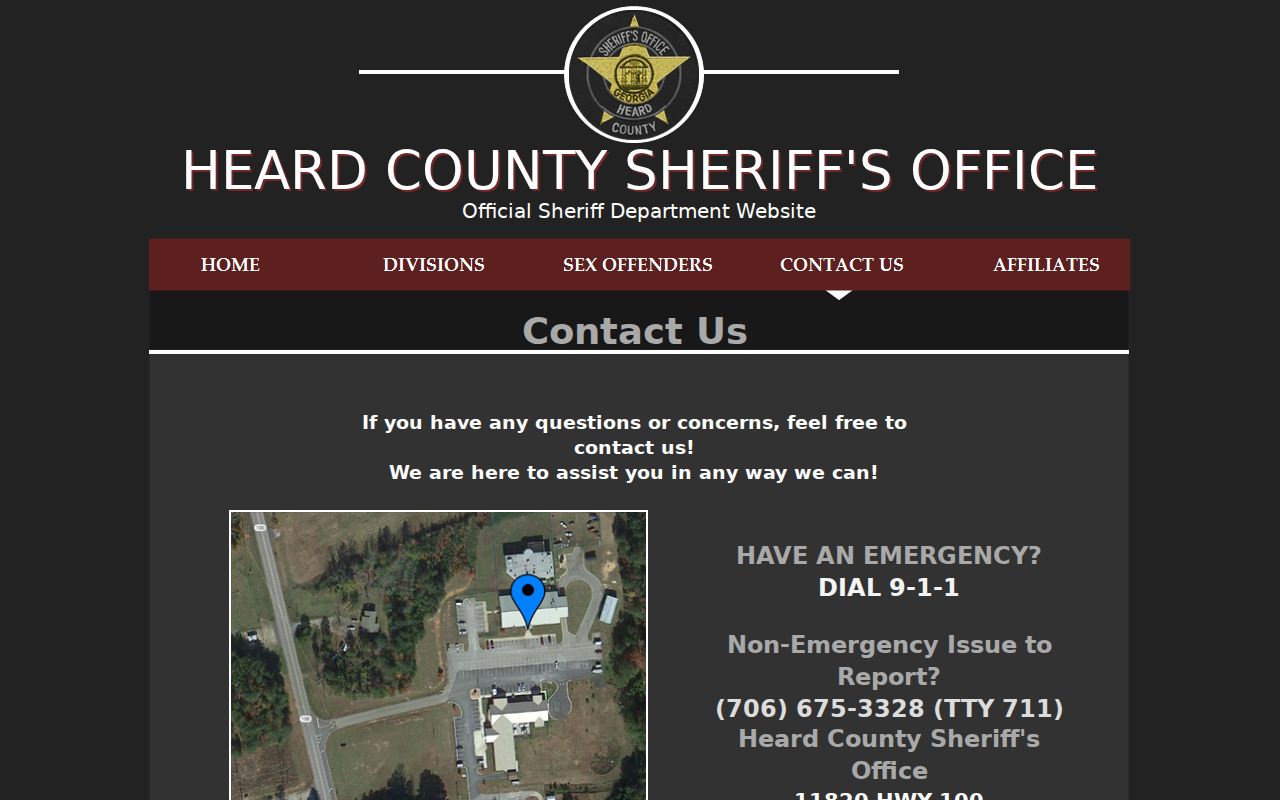
That official contact page replaces any made-up tip portal or reward line. If a program is announced later, verify its official domain, active dates, covered cases, anonymity terms, reward eligibility, and follow-up method. Do not rely on an old repost. Go straight to the Heard County source.
How Most Wanted Differs From an Active Warrant
A most-wanted notice and an active warrant are two different animals. The notice is publicity the agency picks by choice. The warrant is a court order that stays open until the issuing court closes it. Most active warrants never make any curated list. Heard County sharpens the point, since its sheriff posts neither kind of roster online.
| Point | Most-wanted program | Active warrant record |
|---|---|---|
| Scope | A selected public subset | A specific court or agency record |
| Heard publication | No official roster found | No official public search found |
| Best source | HCSO if a program is created | HCSO plus the issuing court |
| Status change | Removal from a public notice | Service, recall, quash, or other lawful court action |
A records request is a third route. It asks Heard County for releasable documents rather than running a live warrant search.
Heard County Warrant Division Pages
The HCSO divisions page lays out the department's units. It offers no warrant-list control of its own. General division links in Heard County are navigation, not a hidden roster.
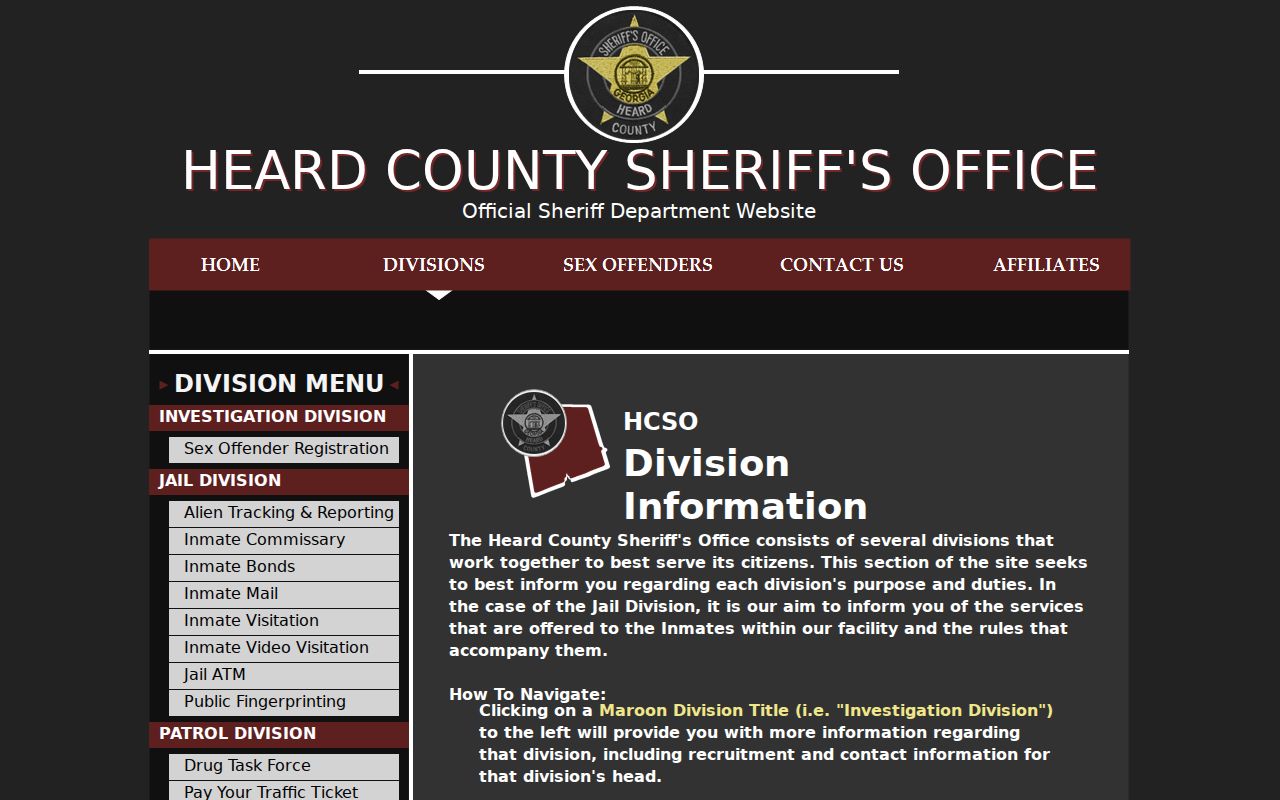
Finding nothing on the divisions page is not a negative warrant check. Court files, city records, sealed cases, juvenile rules, and active investigations all limit what is public. When HCSO cannot speak to court status, ask the clerk of the issuing court in Heard County instead.
Most Wanted Records Request Route
For a targeted written request, the HCSO Open Records form is the practical route in Heard County. Pick review, pickup, or a mailed copy. Send it by email to jolinger@heardcountyga.com, by mail to P.O. Box 339, Franklin, GA 30217, or in person at 11820 Highway 100 N in Franklin. The form promises a response within three business days and allows an estimate when records are not ready at once. Describe the record narrowly. Give a date range and the case details that matter. Georgia guidance makes the first fifteen minutes of search and retrieval free, while added staff work and copying may carry reasonable charges. A response can redact protected details or withhold exempt records. It cannot produce a most-wanted list the agency does not keep. Note: an Open Records request seeks releasable documents and is not an urgent warrant confirmation channel.
When You Believe You Are Listed
Do not wait for a public list if the worry is your own name. Work a planned sequence: a Georgia defense lawyer, HCSO, then the issuing court. The lawyer or clerk can tell you whether it is a bench warrant, an arrest warrant, a city citation, or other process. Ask about voluntary surrender, bond, a motion to recall or quash, and a rescheduled appearance. Get written proof of any change from the Heard County court.
Important: Do not appear at an agency without considering the chance of custody. Confirm the issuing court and seek legal advice before choosing the next step.
A phone call does not clear a warrant. Payment does not always recall one either. Only the issuing court or another authorized process can change the order, and the underlying charge may stay open after service. The Heard County warrant records overview lays out the full county contact chain.
Heard County Warrant Privacy Boundaries
Sealed files, juvenile matters, protected personal data, and active-investigation material can all sit outside public disclosure. That is why a public roster can never replace direct official confirmation. It is also why names, mugshots, addresses, birth dates, and allegations belong to the official source alone. The Georgia Open Records Act leans toward access, yet O.C.G.A. § 50-18-72 supplies exemptions and redaction authority. The civic uses here are narrow: understand an official program, report urgent facts safely, or resolve your own or a relative's matter with consent. Ask Heard County for the least private data needed, through an official channel.
Future Heard County Most Wanted Notices
Heard County runs no warrant amnesty, roundup, safe-surrender event, fee waiver, tip calendar, or walk-in campaign. None appears from the county, the city, HCSO, the courts, the District Attorney, or state sources. Until one does, the ordinary path holds: identify the court, confirm status, ask HCSO about service, and get written court proof. Watch two spots for news. The county news page and the HCSO official pages are where a real announcement would land. A genuine event notice should state its dates, eligible warrant types, arrest terms, court partners, identification rules, payment rules, hours, and an official URL. Do not infer those details from another jurisdiction's program or an old post. Go to the sheriff's own page and let it control any addition, removal, safety instruction, or status change. That is the only reliable source for a future Heard County notice.