
Centralhatchee Warrant Checks
A citation, missed-appearance notice, or ordinance paper is your best first clue. It may name the court that issued the warrant. Centralhatchee offers no public warrant lookup and no separate municipal-court page. Have the exact legal name, date of birth, citation or case number, and the rough event date ready. Give personal identifiers only through an official channel.
- Confirm that the document names Centralhatchee rather than Heard County generally.
- Call Centralhatchee City Hall at (770) 854-5801 and ask which clerk or court handles the matter.
- Ask that clerk whether the record is active, recalled, or set for another appearance.
- For service information, call HCSO at (706) 675-3329 or non-emergency dispatch at (706) 675-3328.
- After confirmation, ask the issuing court or a Georgia attorney about lawful resolution; Georgia has no statewide public warrant search.
Centralhatchee Charter Warrant Authority
Centralhatchee stands on unusually clear legal footing. Its official charter act lets the town municipal court issue warrants for ordinance violations, compel a person's presence, and address bail or recognizance. Bail is the security behind a release. Recognizance is a court-approved promise to appear. The charter attaches no dollar figure to either. That power says nothing about any Centralhatchee case. City Hall remains the practical stop for naming the current clerk and the case route. The charter publishes no Centralhatchee roster, phone-check policy, bond schedule, or recall form. Ask there for the ordinance, case number, court date, warrant status, and the exact next act the court ordered. The official town page gives the Centralhatchee civic source for that contact without exposing any person-level record.
The town's own site anchors the Centralhatchee contact, while the charter act supplies the legal warrant authority behind it.
Policing and Courts in Centralhatchee
Centralhatchee posts no separate police-department or municipal-court warrant page. The official service-delivery strategy explains why: the town contracts with off-duty Heard County Sheriff's deputies for policing, while Franklin runs its own police department. Shared personnel change the contact chain. They do not merge city and county records. A judicial officer issues a warrant. Law enforcement serves it. City Hall should identify the municipal clerk or court route for any Centralhatchee ordinance or traffic matter, and HCSO may confirm service when directed. The clerk controls court status, settings, recall, and the underlying case, while the serving agency controls its return and execution details.
No Centralhatchee Warrant Portal
The city posts no public Centralhatchee warrant, citation, court, or name-search form online. That gap does not mean no warrants exist in Centralhatchee. It means no city webpage gives a complete status answer. Commercial listings and county payment screens cannot fill that gap either.
Portal caution: No online result is not the same as no warrant. Confirm jurisdiction with City Hall and the responsible clerk.
Georgia Courts reports no centralized statewide traffic-citation database either. A Centralhatchee record may sit with the municipal clerk, in an underlying court file, await transmission, or be restricted. Asking with your own identifiers beats any unrelated web database.
Warrants in Centralhatchee: The Main Types
The issuing paper and the court decide the type. Centralhatchee publishes no glossary or bond matrix, so never infer a label from an arrest, an unpaid balance, or a missed date.
| Warrant Type | How It Arises | Issuing Route |
|---|---|---|
| Traffic bench warrant | An unexcused failure to appear on a citation. | The citation court; verify the Centralhatchee route through City Hall. |
| Ordinance warrant | An unresolved city ordinance case. | A municipal judicial officer with jurisdiction. |
| Bench warrant | A missed hearing, contempt, or disobeyed court direction. | The court where the case is pending. |
| Arrest warrant | Sworn information establishes probable cause. | A qualified judicial officer; Magistrate Court is a county-side contact. |
A search warrant lets officers look for evidence. It is not a Centralhatchee warrant check for an arrest or failure-to-appear case.
Centralhatchee Warrant Case Details
A good clerk call covers three linked facts: the ordinance or charge, the municipal case number, and the court date. Those separate a Centralhatchee town case from a county traffic or criminal file. The town charter confirms municipal power over ordinance cases. The citation's face names the court that acted. Read the issuer, court name, citation number, and hearing site back over the phone. Heard Probate Court handles county traffic citations. Magistrate Court takes warrant applications. Superior Court keeps the felony files. One office's clean "no record" can mean the Centralhatchee case simply lives elsewhere. EZ Court Pay only looks up citations and takes payments, so it is no Centralhatchee warrant system. Note: Ask the clerk to repeat the current status and next date before any talk of payment, surrender, or recall.
Centralhatchee Warrant Records: What They Show
A Centralhatchee court file can tie a warrant to an application, citation, affidavit, or case. No local number format is published. The fields that follow Georgia's verified record structure, not an invented Centralhatchee code.
| Warrant or case number | The court identifier linking the order to a case, citation, or application. |
|---|---|
| Subject name | The legal name, checked with date of birth when accepted to distinguish similar names. |
| Charge or offense | The allegation, ordinance issue, or failure-to-appear event. |
| Issuing court | The office controlling hearings, recall, or quashing. |
| Bond or fine notation | Any court-recorded amount or condition; no Centralhatchee schedule is published. |
| Status and return | Active, served, recalled, or disposed status and available service information. |
Ask the clerk which field proves present status, and request a written Centralhatchee disposition when the matter is resolved.
Centralhatchee Warrant Bail Terms
The charter lets the municipal court address bail or recognizance on town ordinance warrants. It posts no amount. Centralhatchee publishes no bond schedule, surrender plan, payment program, or warrant recall fee. Bond is security tied to release and appearance. Recognizance can mean release on a promise, with terms set. Neither one ends the underlying Centralhatchee ordinance case.
- Recall
- The court withdraws its warrant from active effect.
- Quash
- A judge sets aside the warrant through a court act.
- Recognizance
- A court-approved release based on a promise to appear, with any stated conditions.
- Return
- Service or non-service information reported back to the issuing court.
Ask the clerk what the judge authorized, whether appearance is required, and what written entry proves a Centralhatchee status change. A receipt is not a recall.
Centralhatchee Warrants and Heard County
Centralhatchee runs on a split system. A Centralhatchee municipal officer may hold a city case while sheriff's deputies patrol and serve. County matters take other routes: Magistrate Court handles warrant applications, Probate Court county traffic citations, and the Superior Clerk felony cases. Georgia has no public statewide database combining them.
Warrant flow: Centralhatchee municipal clerk or court › Heard County Sheriff's deputies › issuing court status and service return
One call may not settle both. Court status and service differ. The Heard County warrant records overview maps the offices, but the issuing clerk answers a Centralhatchee date, recall, or disposition.
Centralhatchee Warrant Service Roles
HCSO deputies police Centralhatchee. The official service plan uses off-duty Heard County sheriff's personnel, unlike Franklin's separate department. That split points to two contacts. Ask the city clerk for municipal case identity, and HCSO for service or law-enforcement confirmation.
| Question | First contact |
|---|---|
| Which ordinance or city case? | Centralhatchee City Clerk |
| What did the municipal judge order? | The municipal clerk or court route City Hall identifies |
| Was a warrant served or routed to deputies? | HCSO at (706) 675-3329 |
| Is immediate non-emergency routing needed? | Dispatch at (706) 675-3328 |
The clerk still answers recall and the next setting. HCSO service does not make the sheriff custodian of every Centralhatchee court file.
Accessing Centralhatchee Warrant Records
The Georgia Open Records Act leans toward access to identifiable agency records, subject to exemptions. Send a Centralhatchee request to the actual custodian. City Hall can name the municipal one; HCSO takes sheriff records. Share personal identifiers only through the official channel.
Key Rules:
Georgia Open Records Act, O.C.G.A. §§ 50-18-70 through 50-18-76 generally opens records unless an exemption applies.
O.C.G.A. § 50-18-71 governs inspection, copying, response, and reasonable charges.
O.C.G.A. § 50-18-72 permits withholding or redaction; sealed, juvenile, and active-investigation material may also be restricted.
The Act creates no online Centralhatchee warrant list. If material is withheld, ask for the statutory basis and whether a less restricted status record exists.
Centralhatchee Clerk Warrant Route
The official City Hall locations page lists 715 Centralhatchee Parkway, Franklin, (770) 854-5801, and City Clerk Linda Rogers at lindarogers@centralhatchee.com. Weekday hours are posted there too. Call before sending private identifiers. Ask which channel the clerk accepts for a Centralhatchee court-status question.
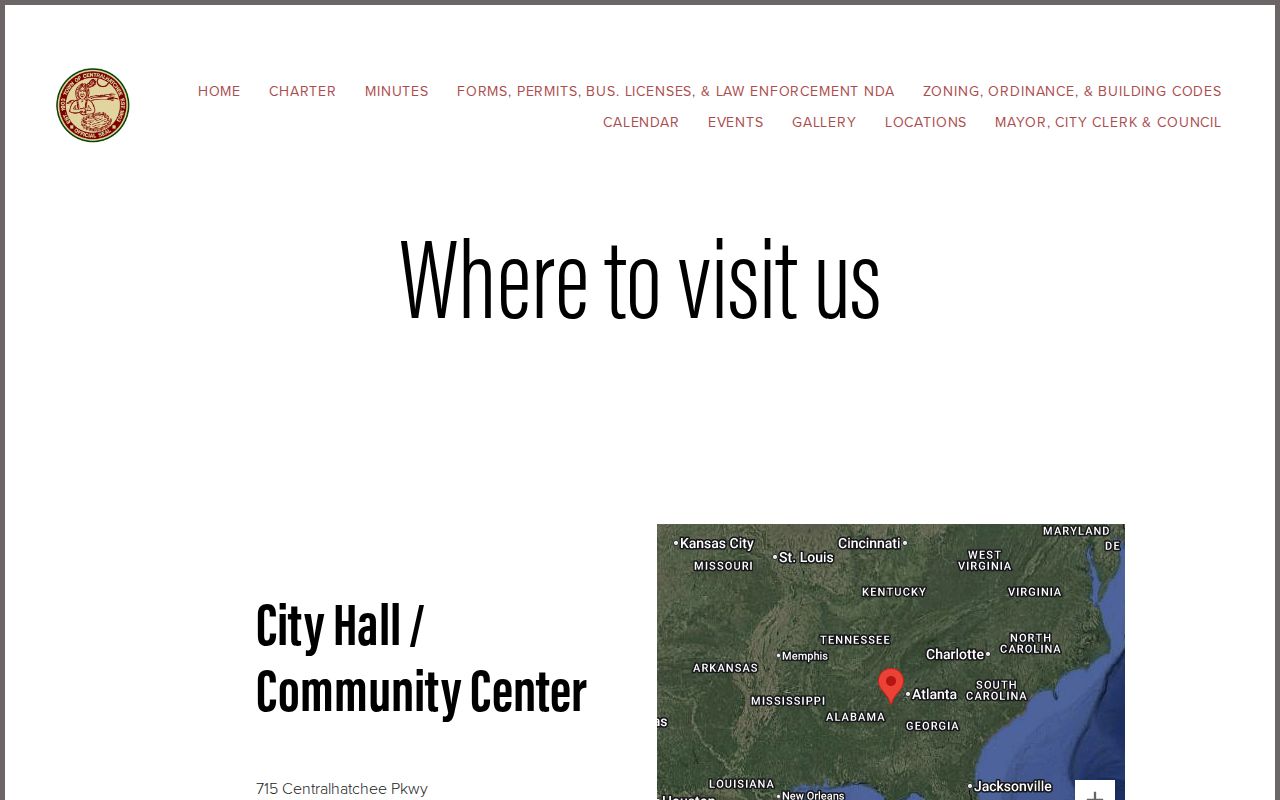
Start with the Centralhatchee town clerk. The sheriff does not hold the town docket by default. If HCSO records matter, email its Open Records request to jolinger@heardcountyga.com or mail it to P.O. Box 339, Franklin, GA 30217. A "no" from the sheriff may still send you back to the Centralhatchee custodian.
Centralhatchee Warrant Charter History
Centralhatchee was chartered in 1903. That history shapes warrant routing. The town is not a branch of county government. Centralhatchee's charter gives the municipal court power over town ordinance cases, with tools to compel appearance. Modern contacts come from the current town site. Read the old charter for jurisdiction; ask the current clerk how the court runs today. The town also points to a public well dating to 1935 or 1936. Civic age proves Centralhatchee is its own incorporated place. It does not create a court calendar or an online warrant list. Centralhatchee publishes no surrender procedure, warrant phone line, or public roster. For status, the clerk remains the door. When an older paper names Centralhatchee, give the clerk the exact date and the ordinance reference. Ask whether the municipal court still holds the file or moved part of it. Historical authority and current custody are related questions. They are not the same one.
Centralhatchee Ordinance Warrant Questions
An ordinance case is the clearest reason to ask Centralhatchee about a municipal warrant. Start with the paper itself. Ask which town ordinance the file cites, and whether the municipal court ordered attendance compelled. Then get the label right. A record may say warrant, bench warrant, failure-to-appear warrant, or capias. Georgia offices use more than one term for the same paper, and Centralhatchee publishes no local status-code legend. Release terms are a separate box. The charter lets the court address bail or recognizance, but it sets no current amount or schedule. Ask what the judge set. Ask whether an appearance is required. Ask what document would prove a later Centralhatchee recall or quash, since a receipt, a call, or a promise to appear does not show that the court changed the warrant. Service is its own layer. Off-duty Heard County sheriff's deputies police Centralhatchee under the official arrangement, so HCSO may hold service or return details. City Hall and the Centralhatchee municipal clerk stay the better sources for the ordinance, the hearing, and the court outcome. A full Centralhatchee warrant record may need both offices. A county traffic case, an adult arrest application, or a felony may leave the town clerk's hands entirely. Probate, Magistrate, and Superior records sit with separate custodians. Such a referral is not a denial. The paper simply belongs to another jurisdiction.